

Stepping into peptide research without knowing the language can leave even Texas innovators feeling out of place. In this fast-evolving field, technical terms like “amino acids,” “molecular weight,” and “purity percentage” carry real consequences for your experiments and data quality. Understanding this core vocabulary is your ticket to reliable results and high-quality materials. This guide breaks down the most important peptide concepts so you can choose with confidence, interpret certificates like a pro, and avoid costly lab mistakes.
Table of Contents
- Core Peptide Terms and Jargon Decoded
- Types of Peptides and Their Differences
- Peptide Synthesis, Purity, and Testing
- Route of Administration in Research
- Common Research Pitfalls and Misconceptions
Key Takeaways
| Point | Details |
|---|---|
| Understanding Peptide Terminology | Familiarity with core terms like amino acids, molecular weight, and purity is essential for conducting meaningful peptide research. |
| Importance of Purity and Testing | Ensure peptides have a high purity percentage and undergo rigorous testing to avoid data contamination and reproduce reliable results. |
| Consider Delivery Methods | The theoretical route of administration significantly influences peptide behavior and the experimental design; choose appropriately based on research aims. |
| Avoid Common Mistakes | Double-check reconstitution calculations, storage conditions, and purity details to prevent research pitfalls that can lead to invalid data. |
Core Peptide Terms and Jargon Decoded
Walking into the peptide research world without knowing the terminology is like showing up to a Texas barbecue without understanding the difference between brisket and ribs. You’ll be lost. The field throws around terms like amino acid sequences, molecular weight, and purity percentages like everyone should already know what they mean. Spoiler: they don’t. Let’s cut through the noise and break down the core vocabulary that separates actual researchers from pretenders.
Amino Acids are the building blocks of every single peptide on the planet. Think of them as the Lego bricks of protein chemistry. These 20 standard amino acids link together in different orders to create different peptides, and that sequence matters enormously. The order determines function, stability, and everything about how a peptide behaves in a research setting. When researchers talk about a peptide’s “sequence,” they’re literally listing which amino acids appear in which order. Understanding peptide definition and function gives you the foundation for why this matters so much.
Molecular Weight (MW) is measured in Daltons (Da) and tells you how heavy a single peptide molecule is. A short peptide might be 500 Da, while a larger one hits 5,000 Da or more. This number matters because it affects how a peptide dissolves, how it’s absorbed, and how it behaves in various research environments. You’ll see this listed on every certificate of analysis (COA) we provide because it’s non-negotiable for verification. Purity is the percentage of your compound that is actually the target peptide versus contaminants, byproducts, or filler. We’re talking 95%, 98%, 99% pure compounds. Lower purity means your research data gets contaminated with junk you didn’t ask for. That’s why Area 15 Labs obsesses over third-party testing and delivers verifiable purity data every single time. No guessing games.
Lyophilization (fancy word for freeze-drying) is the process that converts liquid peptide solutions into stable powder. It removes water while preserving the peptide’s structure, making storage easier and shelf-life longer. You’ll see this listed on product descriptions because it tells you the peptide is shelf-stable rather than requiring constant refrigeration. HPLC stands for High-Performance Liquid Chromatography, the gold-standard testing method used to measure purity and confirm peptide identity. When we say “HPLC verified,” we mean a machine ran the sample through rigorous analysis to prove what you’re getting is exactly what you ordered. That’s the quality assurance that separates legitimate research suppliers from sketchy operations running out of sketchy locations.
Other terms you’ll encounter include amino acid residues (the remaining part of an amino acid after linking to another), disulfide bonds (chemical links between amino acids that add stability), and molecular formula (the exact count of atoms in the peptide). Peptide quality control standards rely on understanding these specifications because they directly impact research validity.
Pro tip: Bookmark the COA (Certificate of Analysis) for every peptide you order and match the molecular weight, purity percentage, and HPLC results to the product description before starting your research. This five-minute verification step saves you from wasted experiments and unreliable data.
Types of Peptides and Their Differences
Not all peptides are created equal. The peptide world splits into different categories based on structure, origin, and function, and knowing the difference is critical for choosing the right compound for your research. Some peptides are simple chains, others are twisted into rings, and some are designed with cutting-edge modifications that boost stability and efficacy. Think of it like the difference between a straight road and a circular track—same destination in mind, totally different geometry.
Linear peptides are the straightforward option. They’re amino acid chains strung together in a line, exactly like beads on a string. Most research peptides start here. Cyclic peptides take that same chain and loop it back on itself, creating a ring structure that offers better stability and resistance to degradation. This matters because cyclic peptides stick around longer in research environments. Cell-penetrating peptides (CPPs) are specifically engineered to cross cell membranes, making them valuable for drug delivery research. Antimicrobial peptides are naturally occurring or synthetically designed peptides that kill bacteria, fungi, or other microorganisms, and they’re massive in research exploring alternative approaches to traditional antibiotics. Different peptide structures serve distinct research purposes depending on your experimental goals.
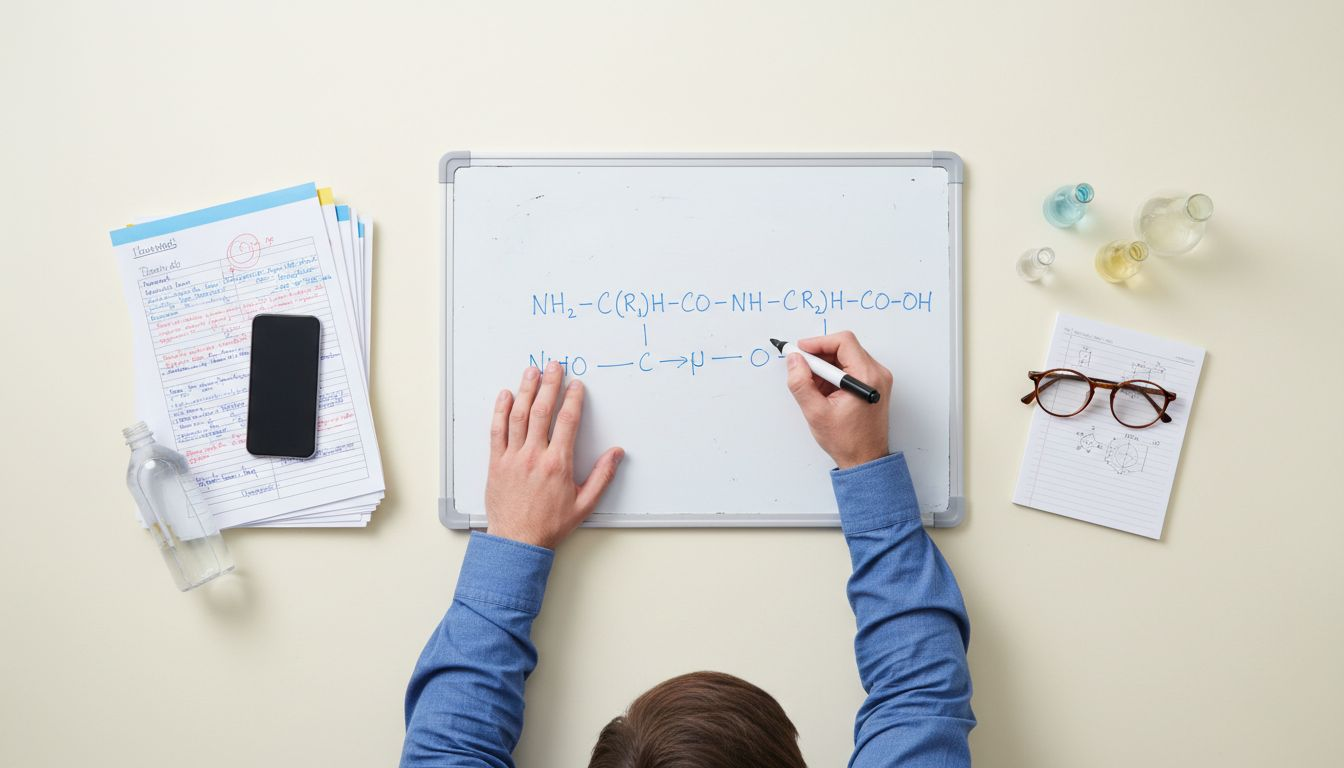
Stapled peptides represent the frontier of peptide engineering. Researchers chemically link non-adjacent amino acids together with synthetic bridges, creating a locked, rigid structure that resists enzymatic breakdown and improves cellular uptake. This modification turns a floppy peptide into something more robust. Understanding how lab peptides are made reveals why these architectural changes matter so much for research validity. Peptides also vary by origin—some are naturally derived from biological sources through enzymatic breakdown of larger proteins, while others are completely synthetic, built from scratch in the lab. Synthetic peptides give you absolute control over sequence and purity, which is why Area 15 Labs focuses exclusively on lab-synthesized compounds. You know exactly what you’re getting, down to the last amino acid.
The choice between linear, cyclic, stapled, and antimicrobial peptides depends entirely on your research question. If you’re studying protein interactions, linear peptides might be perfect. If you need something that survives longer in harsh conditions, cyclic or stapled versions make sense. If you’re exploring membrane transport or antimicrobial mechanisms, those specialized types become non-negotiable. The structure you choose directly impacts your data quality, so this isn’t a decision to make casually.
Here’s a quick comparison of major peptide types and their research applications:
| Peptide Type | Key Structure | Main Advantage | Common Research Use |
|---|---|---|---|
| Linear | Straight amino acid chain | Simple and cost-effective | Protein interaction studies |
| Cyclic | Amino acids form a ring | Enhanced stability, less degraded | Extended shelf-life assays |
| Stapled | Chemically bridged residues | Improved cellular uptake | Signal pathway analysis |
| Cell-penetrating (CPP) | Engineered for cell entry | Transports molecules into cells | Drug delivery models |
| Antimicrobial | Natural or synthetic forms | Targets pathogens/infection | Antibacterial mechanism study |
Pro tip: Consult the structural specifications and intended research application before ordering—linear peptides are cheaper and faster to produce, but cyclic or stapled versions might be worth the extra cost if your experiment demands superior stability and cellular penetration.
Peptide Synthesis, Purity, and Testing
Peptide synthesis sounds like an alien process, but it’s actually a controlled chemical conversation where amino acids link together one by one. The real magic happens afterward—in purification and testing. A synthesized peptide fresh from the lab is messy. It’s contaminated with byproducts, unreacted starting materials, and all kinds of junk you didn’t order. That’s where purification steps in. The goal is simple but demanding: strip away everything that isn’t the target peptide, leaving you with a compound pure enough for legitimate research. Area 15 Labs doesn’t compromise here. We run every batch through rigorous purification protocols that remove 99% of contaminants, then verify the results with third-party lab testing. No shortcuts. No guessing.
Peptide synthesis typically uses solid-phase synthesis, where amino acids are added one at a time to a growing chain attached to a solid support material. This method is predictable and scalable, making it the industry standard for producing research-grade peptides. Once the chain is complete, researchers use reverse-phase HPLC (High-Performance Liquid Chromatography) to separate the target peptide from everything else. Think of HPLC as a molecular bouncer at a club—it physically separates compounds based on their properties and lets only the pure target peptide through. Advanced analytical methods ensure peptide purity confirmation through precise chromatographic techniques that meet pharmaceutical standards.
Once purified, peptides undergo multiple testing procedures to confirm identity and purity. HPLC analysis measures purity percentage (we target 95% minimum, often achieving 98%+). Mass spectrometry (MS) confirms the exact molecular weight and structure. Amino acid analysis breaks down the peptide and verifies the sequence is correct. The resulting Certificate of Analysis (COA) documents everything—purity, molecular weight, identity confirmation, and more. This is your proof that the peptide is legit. When you order from Area 15 Labs, you get the COA attached to every order because transparency isn’t optional.
Lyophilization (freeze-drying) comes next, converting purified peptide solutions into stable powder that’s easier to store and transport. This process removes water while preserving peptide integrity, which is why proper storage of lyophilized peptides directly impacts your research validity. A poorly stored peptide degrades over time, contaminating your experiments with degradation products. Temperature, humidity, and light exposure all matter. The synthesis-to-testing pipeline exists for one reason: to deliver you a compound you can actually trust. Sketchy suppliers skip testing or lie about results. Real researchers demand verification, and that’s exactly what separates Area 15 Labs from the noise.
Key analytical methods for peptide validation and their purpose:
| Testing Method | What It Verifies | Why It Matters |
|---|---|---|
| HPLC | Purity and identity | Ensures sample is uncontaminated |
| Mass Spectrometry | Exact molecular weight | Confirms correct structure/synthesis |
| Amino Acid Analysis | Amino acid sequence | Verifies peptide matches intended |
| Certificate of Analysis (COA) | Documentation of all results | Provides transparency and traceability |
Pro tip: Request the full COA before purchasing and cross-check the molecular weight and HPLC purity percentage against published data for that specific peptide sequence—this five-minute verification step catches 90% of counterfeit or degraded products before they waste your research time.
Route of Administration in Research
Here’s where things get interesting. “Route of administration” is scientific speak for “how does this compound get where it needs to go in your research?” In laboratory research, this isn’t about injecting anything into living subjects. It’s about understanding how peptides would theoretically travel through biological systems in theoretical scenarios, and how that knowledge informs your in-vitro experimental design. The route matters because it determines how the peptide behaves, how quickly it acts, and what formulations or delivery mechanisms you’ll test in your glass-ware-based research.
In research contexts, scientists study different theoretical delivery pathways to understand peptide behavior. Parenteral routes refer to theoretical studies involving injection methodologies—subcutaneous, intravenous, or intramuscular pathways are analyzed in controlled laboratory settings using test samples and cellular models. Oral administration is studied in vitro to understand how peptides might theoretically survive stomach acid and intestinal enzymes. This is why peptide researchers test stability under acidic conditions and design protective formulations in the lab. Transdermal delivery is examined through permeation studies using synthetic membranes that mimic skin barriers. Pulmonary routes are studied using lung tissue models and aerosol delivery systems in controlled laboratory environments. Various peptide delivery methodologies present unique bioavailability challenges that researchers address through formulation science and advanced delivery technologies.
Each route has distinct advantages and limitations that affect your research approach. Parenteral routes offer fast onset and predictable absorption in theoretical models, but require sterile formulations and stability in various conditions. Oral routes face degradation challenges, so researchers test enzyme inhibitors and protective coatings. Transdermal approaches require enhanced permeability, pushing researchers toward novel formulation strategies. Understanding these differences helps you design experiments that actually answer your research questions. If you’re studying how peptides interact with cellular receptors, you’ll focus on in-vitro cell culture models. If you’re exploring formulation stability, you’ll test compounds under conditions that simulate different theoretical exposure environments.
For researchers preparing peptides for various theoretical delivery studies, proper preparation is essential. This includes working with research-grade diluents that maintain peptide integrity during preparation. The formulation you choose directly impacts how your research develops. A peptide dissolved in the wrong medium degrades, skewing your data entirely. Whether you’re conducting stability studies, cellular uptake research, or molecular interaction analysis, the theoretical route you’re studying shapes every experimental decision. Area 15 Labs supplies peptides optimized for laboratory research across multiple delivery study scenarios, with documentation that supports rigorous in-vitro work.
Pro tip: When designing your research protocol, explicitly state which theoretical delivery route you’re modeling in your in-vitro experiments, then select formulation and storage conditions that match those parameters—this clarity prevents wasted experiments and ensures your data remains reproducible across batches.
Common Research Pitfalls and Misconceptions
Peptide research attracts smart people. That’s also where problems start. Smart researchers sometimes skip the basics because they assume they understand something they actually don’t. Misconceptions kill experiments. Bad assumptions waste months of work. The field is littered with researchers who thought they knew what they were doing and ended up with useless data. Let’s break down the most common mistakes so you don’t become a cautionary tale.
The biggest misconception is that peptide purity doesn’t matter as much as researchers claim. Wrong. A 90% pure peptide isn’t just 10% less pure than a 99% pure version. That 9% difference represents contaminants that interfere with your data, skew your results, and make your findings unreproducible. Researchers often rationalize buying cheap peptides by thinking the contaminants “won’t affect my study.” They will. Every time. Another major pitfall is assuming all peptide suppliers test their products equally. They don’t. Some suppliers use outdated testing methods, others skip critical analysis steps entirely, and a few just lie on their certificates of analysis. When you order from Area 15 Labs, every batch gets third-party verified testing. That’s not normal in this industry. Most competitors don’t do it. The fact that we do it is exactly why we stand out.
Reconstitution mistakes rank high on the disaster list. Researchers dissolve peptides incorrectly, use wrong diluents, or miscalculate concentrations, then wonder why their data doesn’t match published references. Understanding reconstitution mathematics prevents calculation errors that contaminate your entire experiment. A simple math mistake means your “concentration” is actually 50% of what you think it is, invalidating everything downstream. Researchers also assume all peptides are stable under the same storage conditions. They’re not. Some require freezing, others degrade in freeze-thaw cycles, and many break down rapidly if exposed to light or humidity. Your storage protocol must match your specific peptide. Generic storage assumptions destroy peptides every single day in labs across the country.
Another misconception is that buying the cheapest peptide saves money. It doesn’t. A cheap peptide that’s impure, unstable, or contaminated wastes your time, your reagents, and your research budget. You end up repeating experiments, troubleshooting problems that don’t exist, and ultimately spending more than if you’d bought quality from the start. Researchers also underestimate how much they don’t know about their own compounds. You receive a peptide and assume the documentation is complete. Often it isn’t. Missing stability data, incomplete purity breakdowns, or vague synthesis information creates gaps in your research logic. When you work with Area 15 Labs, we provide comprehensive documentation that answers the questions you didn’t even know to ask.
Pro tip: Before starting any peptide experiment, verify three things: the exact purity percentage and testing method used, the complete storage protocol with temperature and humidity requirements, and your reconstitution calculations twice—this paranoia prevents 80% of peptide research failures.
Master Peptide Research With The No-BS Powerhouse From Texas
Struggling to decode complex peptide jargon or tired of unreliable suppliers muddying your data with sketchy purity and unclear testing standards The article “Key Terms in Peptide Research Explained Fast” breaks down essential peptide concepts like molecular weight purity and lyophilization—all crucial for trustworthy results. At Area 15 Labs we get it You’ve got no time for vague certificates or slow shipping from overseas. That’s why we offer lightning-fast Texas-based fulfillment with every batch third-party verified so you can skip the guesswork and get back to what matters: legit laboratory research.
With our transparent quality control standards and cutting-edge peptide synthesis insights you gain full confidence from sequence accuracy through to purity verification. Don’t settle for less when your experiments demand precise data and ultra-clean compounds. Join a community of sharp researchers who trust the “no-nonsense” alternative that marries rigorous science with serious swagger.
Ready to eliminate doubt and boost your peptide research with pure compounds shipped same day from Texas Discover how at Area 15 Labs where quality meets speed. Step into the future now and fuel your next breakthrough like a true Citizen Scientist.
Frequently Asked Questions
What are the building blocks of peptides?
Amino acids are the building blocks of peptides. They link together in specific sequences to form peptides, and the order of these amino acids determines the peptide’s function and behavior.
What does molecular weight (MW) indicate in peptide research?
Molecular weight (MW) is measured in Daltons (Da) and indicates how heavy a single peptide molecule is. This measurement affects dissolution, absorption, and overall behavior in research environments.
Why is peptide purity crucial in research?
Peptide purity is essential because it determines the percentage of the target peptide versus contaminants. Higher purity (95% or more) ensures reliable and reproducible research data by minimizing interference from unwanted substances.
What is lyophilization and why is it used in peptide storage?
Lyophilization, or freeze-drying, is a process that converts liquid peptide solutions into stable powders. This method removes water while preserving the peptide’s structure, making it easier to store and extending shelf life.

[…] Key Terms in Peptide Research Explained Fast […]